

By J. Nathan Lawrence at HoshanaRabbah.org
The following three articles are based on my research into the religion of Islam as well as its “holy” book called the Koran (or Qur’an). The first article is a review of a book where the author explores the dark and uncertain origins of the world’s second largest religion (after Christianity) and, based on unimpeachable evidence, comes to some surprising conclusions that will shock the reader. The second article is a study on the biblical figure called “the Antichrist” and “the spirit of antichrist”. Based on the Bible’s criteria for this person and the spirit behind the personage, the Islamic religion fits the definition of “the antichrist spirit” better than any other religious system. My third study is a critique on the Koran itself based on my reading the book from cover to cover. There I expose the most troubling things that the Koran teaches about the religion of Islam, what Muslims practice and their view toward and treatment of non-Muslims or “the infidels.”
Did Muhammad Exist—An Inquiry Into Islam’s the Obscure Origins
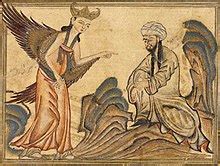
By Robert Spencer ISI Books; 2021 Wilimington, Delaware
A Book Review and Commentary on Muhammad and Islam’s Questionable Origins
By J. Nathan Lawrence at HoshanaRabbah.org
This impeccably and meticulously well researched book makes a compelling case for the following:
The religion of Islam fits the biblical definition of the spirit of antichrist and most likely the end times Antichrist figure will arise out of this religious system (see notes below).
The historical evidence presented in this book indicates that Islam was the spawn of an earlier aberrant and apostate form of first or second century Hebraic Christianity that denied the virgin birth of Yeshua, that he was the Son of Elohim, that he was incarnated, and resurrected from the dead. Clearly, the several of these points are defining characteristics of the spirit of antichrist as defined by John the apostle in his first and second epistles. The precursor Arabic religious system that over the period of a couple of hundred years eventually developed into what we now know as Islam may have been influenced by aberrant and heretical Christian influencers such as Marcion of Sinope, or possibly by religious movements known as Manichaeism, Nestorianism, Arienism and the Ebionites. To wit, like Islam, Manichaeism, for example, was an amalgam of several Rabbinic Jewish, Christian, Greek and other religious systems although Islam took on a more Arabic flavor, and then purported to be the final word (or divine revelation) of these religions which influenced it. However, unlike Manichaeism, Islam was decidedly mono-theistic and dogmatically anti-poly theistic.
In regards to the Christian origins of Islam, read the eyewitness testimony of John of Damascus in Syria (a.d. 675/6-749), a Christian monk who lived in the time and place of the birth of the religious system that later became known as Islam. He gives a detailed first hand account of how this religious system was spawned from aberrant and heretical form of Christianity. (See http://orthodoxinfo.com/general/stjohn_islam.aspx; https://hugoye.bethmardutho.org/article/hv11n2griffith.html; https://almuslih.org/wp-content/uploads/2024/11/Sahas-D-–-John-of-Damascus-.pdf; https://malankaralibrary.com/ImageUpload/e2ff05250ebc2278dd24208a9dbb8ae4.pdf; https://www.catholic365.com/article/30037/saint-john-of-damascus-his-encounter-with-islam.html; https://theologiaorthodoxa.wordpress.com/2025/06/25/john-of-damascus-against-islam/; https://medium.com/@albani/critically-examining-john-of-damascus-claims-about-islam-with-scholarship-7943fa965638).
Several Koranic scholars have discovered that the text of the Koran contains hidden behind it a ground layer containing a pre-Islamic Christian subtext or substratum (pp. 166ff; 181). The Koran’s defiantly anti-trinitarian viewpoint and dogmatic insistence that Christ is not divine coupled with the hard line assertion that Allah is one and there is none beside him seems to be a response to the Christian Orthodox position that Christ is the only begotten Son of God and that the biblical Godhead is a tripartite though singular Being (p. 181f). Moreover, the first few decades of the Arab conquest show the conquerors holding not to Islam as we know it, but to a vague creed with ties to some form of aberrant Christianity and Judaism (p. 182).
Spencer suggests that the Islamic belief that Jesus Christ was merely a created and not a divine being originated from either the heretical Christian teachings of Arius, a fourth century Christian priest, or the Jewish Christian Ebionites whose influence spread throughout to Syria and the surrounding areas in the centuries prior to the advent of Islam (p. 179).
This book confirms my previous discernments that Muhammad, if he even existed, was a sex-crazed, demon-possessed pedophile, who was driven by his craven lust for sex, conquest and power. Whether he existed or not or is merely a folkloric personality is immaterial. Millions of people believe that he existed, that he was “the messenger of God”(what god that may be is open to debate), and is therefore the epitome of what it is to be a Muslim, and, therefore, his life is to emulated including his lust for women and multiple wives and his penchant for the conquest and murder of his enemies. Thusly Islam is a religion that is driven by the desire to kill, steal and destroy (attributes of Satan himself according to Yeshua; see John 10:10), and is further empowered by the craven and rabid testosterone-driven lust for sex with one’s wife, wives, with children, as well as one’s slaves or with conquered infidels coupled with a lust for power, with no prohibition against one’s craven anger-fulled hatred against all non-Muslims or even other Muslims who do not believe as you do.
Spencer shows that Islam, based on numerous Koranic passages, is a totally contrived, confused and mongrelized amalgam of various beliefs and ideologies formed from the religions that were indigenous to the Arabian region of its era including Judaism, Christianity, Greek dualism, and various Arabian pre-Islamic pagan religious beliefs and practices and possibly even Persian Zoroastrian elements tossed into the mix.
Moreover, the Koran (or Qur’an) is a disjointed book full of out of context and unrelated and often contradictory and non-cohesive ideas manifesting a lack of unity and harmony with itself. The thumbprint or imprimatur of a transcendent Divine Intelligence that is present in the Bible is totally absent in the Koran. Spencer shows that Islam is more a political movement rather than a religious one. It is about empire building, the lust for conquest, power, material possessions and territory under the thin and unifying veneer of religion.
After reading this book and studying the history of Islam, the historical record confirms that Islam’s rapid spread across the Middle East, Near East, northern Africa and into southern Europe of the seventh and later centuries was driven by the lust for blood, power, sex, and booty and this remains the driving force behind Islam’s spread to this day.
Islam’s chief enemies are firstly Jews and Christians and then all people who are not Muslim. Why the intense hatred for the first two? My assessment is that this is because Christianity has Hebraic or Jewish roots, and from Christianity came the recognition of man’s Jewish Redeemer (Jesus or Yeshua). Moreover, it is the biblical religions of Christianity to a larger degree and Judaism to a lesser degree which have continuously opposed Satan and his counterfeit religious systems at every turn from the beginning and will continue to do so until Yeshua the Messiah’s return, at which time Satan will be forever deposed and bound in the bottomless pit for a season and then cast into the lake of fire for eternity. This whole idea is anathema to the satanic religion of Islam for obvious reasons.
Based on the evidence Spencer produces in his book (p. 207ff), he shows how Islam sprung from an amalgamation of several religious strains. This includes several Christian groups (e.g., the Nestorians and Jacobites) that were forced out of the Christian Byzantine Empire because of their denial of the tripartite Godhead after the Christian ecumenical councils which deemed them as heretics. These groups adhered to a strict monotheistic and non-trinitarian view of God. Moreover, Spencer points out that the earliest pre-Islamic Arab rulers appear to have been adherents to Hagarism, a monotheistic religion centered around Abraham and Ishmael where the worship of the (one) God of Abraham was the main focus as opposed to Christianity’s tripartite view of God. Additionally, Islam’s monotheistic focus seems to have encompassed some of the main elements of the monotheistic movements of its era including Hagarism, Judaism, Christianity and even Persian Zoroastrianism (to a lesser degree). Initially, and this is reflected in numerous passages in the Koran, Islam was more favorable to both Judaism and Christianity than it later came to be (which is also reflected in several Koranic verses pertaining to the murder and dismemberment of “the people of the book” or Jews and Christians). Islam’s former orientation vis-à-vis its religious rival is evidenced by Christian crosses that are to be found on early Muslim coinage and even in some early mosques, which Spencer documents elsewhere in his book. Spencer then goes on to postulate that from the seventh century onward over the next several hundred years, Islam slowly developed into what it is known as today in response to the need to unify politically and culturally the vast empire that the Arabs had conquered in a relatively short time from the second part of the seventh century onward, even as Constantine had effectively done when he embraced Christianity as the Roman Empire’s state religion in the early decades of the fourth century. Spencer postulates that the unification of the Arabic empire was the impetus for the codification of the Koran long after the supposed death of Muhammad and establishment of a distinct and defined Islamic theology and culture.
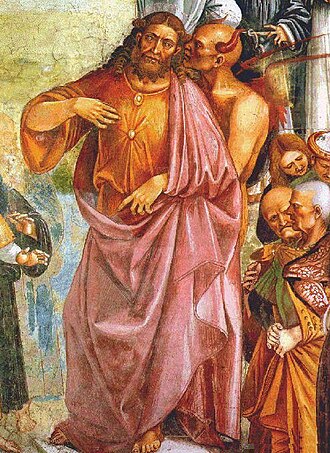
Revealing the Identity of the Antichrist
By J. Nathan Lawrence at HoshanaRabbah.org
In his first epistle epistles, John the apostle mentions a term that has become synonymous with the archenemy of Christ or the Messiah and Christians everywhere. It is Antichrist. This word’s meaning is self-evident, but, by John’s own definition, let’s now discover who really fits the strictest definition of Antichrist.
The first place John mentions this term is in the second chapter of his first epistle.
Little children, it is the last hour; and as you have heard that the Antichrist is coming, even now many antichrists have come, by which we know that it is the last hour. (1 John 2:18)
John then goes on to make two further references to this arch-villain of the Messiah and his disciples.
Continue reading